Among the historic façades of central Ghent is an alley that is deliberately never “finished”. Its official name is Werregarenstraat, although most visitors know it as Graffiti Street.
The walls form a changing canvas for street art. Something you see in a photograph may already have been painted over when you arrive. That is precisely what makes this place interesting: it is not a frozen open-air museum, but a streetscape that keeps evolving.
Where is Graffiti Street?
Werregarenstraat is a narrow alley in the historic centre, between Hoogpoort and Onderstraat and close to Ghent City Hall. Search for the official street name if your map does not immediately recognise “Graffiti Street”.
This is a short stop, not an entire city walk. Use our Ghent City Map to place it among other sights, then let your own navigation provide the current connection. That avoids relying on an old blog route when temporary works or closures affect the streets.
Why does the art keep changing?
Cultuur Gent describes the alley as a tolerance zone where spray painting is permitted. Both beginners and experienced artists use the walls to practise and show their work. New layers appear over older images.
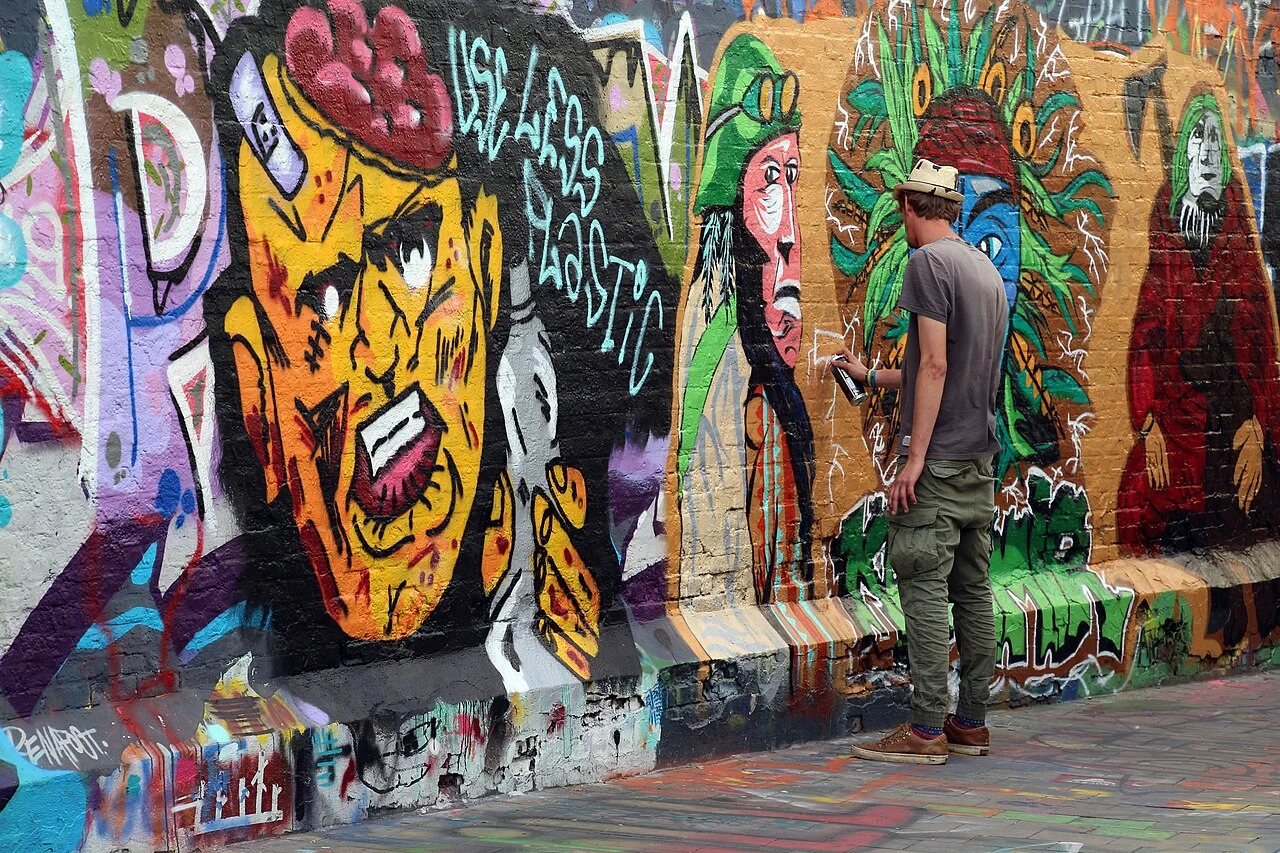
Visit Gent therefore calls it a colourful, ever-changing alley. Do not expect to find exactly the same work that appears on social media or in this article. Our photograph was taken on 30 May 2019 and is only a snapshot.
Rather than searching for one large picture, notice the lettering, small figures, fields of colour and the way separate layers overlap. A partly covered image is part of the character of this place.
Visit the alley respectfully
Werregarenstraat is a visitor attraction, but it remains part of a real urban neighbourhood. Keep the passage clear when taking photographs and leave room for other visitors. The official visitor information also asks people to respect other artists’ work and the evening peace of local residents.
Do not touch an artist’s materials or climb on private features for a photograph. If somebody is working, do not assume that they want to be photographed. A simple gesture or short question is more respectful than immediately pointing a camera at them.
If you want to paint, do not rely only on what you see other visitors doing. Consult the city’s current information about the tolerance zone and local expectations first. This article is a visitor guide, not permission or a technical guide to applying graffiti.
Do not turn it into a hunt for one artwork
Street art is temporary. An image may remain visible for days or longer, but there is no guarantee that it will still be there when you visit. That makes a list of “must-see works” quickly obsolete.
Photograph what catches your attention on the day. A wide view conveys the intensity of the alley; details show how styles and layers coexist. If you return later, you can compare your pictures without treating one version as definitive.
To discover more street art, consult Ghent’s current official Sorry, Not Sorry map. Check it directly with the City of Ghent or Visit Gent, because public art can disappear, move or be painted over.
Combine the stop with your own city plan
Its central location makes the alley easy to include in a day exploring the historic centre. Our one-day Ghent guide helps you limit your choices, while the Ghent shopping guide is useful when combining art, independent shops and the better-known shopping streets.
Near Vrijdagmarkt you can also see Dulle Griet. Treat these as separate building blocks rather than a prescribed route or promise about walking times. Check what is open and accessible on the day.
After a full day of colour, shops and historic streets, you may want to plan some deliberate downtime. Baan Sabai is at Roeispaanstraat 17, near Gent-Sint-Pieters and outside the historic centre. A massage is therefore a separate appointment that needs its own travel time.
Check available massage appointments in Ghent →
Frequently Asked Questions
What is the official name of Ghent’s Graffiti Street?
Its official street name is Werregarenstraat. The narrow alley runs between Hoogpoort and Onderstraat, close to Ghent City Hall.
Does Graffiti Street always look the same?
No. New graffiti appears over older layers, so the walls keep changing. Photographs always capture one moment in time.
May I photograph the street art?
Visitors commonly take photographs. Keep the passage clear, respect local residents and ask before prominently photographing an identifiable artist.
Is Graffiti Street a complete street-art route?
No, it is one short location. For several street-art sites, consult Ghent’s current official Sorry, Not Sorry map.